
History
Professors and students from West Virginia University (WVU) have been working on the technology of low temperature plasma generation since at least 1990. Most of that work has been captured over the intermediate years by patents by WVU and in formal scientific papers. Our company was formed in 2020 as Advanced Technologies for Tomorrow Today, LLC (ATfTT). We then licensed all the WVU patents relative to plasma generation and applications. Today, we are known as Fourth State Energy LLC.
Our Work
Initially, our work continued the WVU development for fuel ignition to make combustion engines more efficient and more pollution free. In recent years, the world’s emphasis on improving the environment and the movement away from internal combustion engines toward more Electric Vehicles evolved.
We thus pivoted our work to now apply the low temperature plasma to natural gas conversion. In fact, since the State of West Virginia has an expanding business enterprise in natural gas production using highly efficient fracking technology, we chose to concentrate our plasma generation technology on developing natural gas (methane) conversion to useful and valuable products. Initially, we concentrated upon methane conversion to hydrogen and carbon.
Our simple, low power, low-cost reactor device lowers the traditional cost of making hydrogen and carbon and generates no pollutants in complete contrast to those pollutants generated by the conventional steam methane reforming process. This technology easily and simply scales up to high production levels and lowers costs and pollution caused by conventional steam reformers.
Our People
As you can see from the attached directory, we have one retired Professor Emeritus of Electrical and Computer Engineering, a retired Professor Emeritus of Computer and Electrical Engineering Technology, a former student who is now a well-respected PhD consultant in Electromagnetics, another former student who is a world class technologist, and another PhD consultant in physics and chemistry. In addition, we have an attorney who is a former diplomat and is intimately familiar with the energy business.
Our team would be happy to discuss our technology with you.
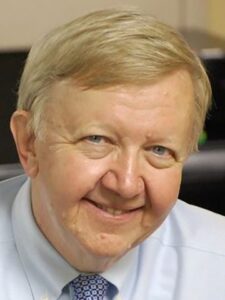
Roy S Nutter, Jr., Ph.D., P.E., LFIEEE
Dr. Nutter is a licensed Professional Engineer in the State of West Virginia and a Life Fellow of the Institute of Electrical and Electronic Engineers. He was awarded the grade of Fellow in 1993 for “the introduction of microprocessor and advanced computer technology to applications in the mining industry.” He is also a Professor Emeritus in the Lane Department of Computer Science and Electrical Engineering at West Virginia University and a member of the WVU LCSEE Academy of Distinguished Alumni. Additionally, he is a long time member of the National Society of Professional Engineers, the American Radio Relay League, and Society of Automotive Engineers.
In 2002, he organized and represented WVU as Director of the West Virginia Cyber Crime Cooperative, WV3C. WV3C created an on campus digital forensic laboratory with the West Virginia State Police, and the National White Collar Crime Center. WV3C currently houses the WVSP Digital Forensics Unit, the WV ICAC Unit, and the WVSP Child Protection Unit.
Professor Nutter’s basic discipline is embedded microprocessors although that has broadened over the years to include: computer architecture, neural networks, cyber security, and electric vehicles. Professor Nutter has published nearly 100 articles in refereed journals and refereed conferences as well as many grant and contract reports and provided many invited presentations. He has been awarded 13 patents. WVU has been awarded over $19M over this period directly because of his efforts.
Professor Nutter was instrumental in the forming of the National Cyber Forensics Training Alliance, NCFTA, an IRS 501c3, with offices in Pittsburgh, New York City, and Los Angeles. He served on the NCFTA Board of Directors from 2003 to 2021.
His research areas have included gas and air monitoring and control, robotics and automation, large software systems, and AI and NN applications to navigation, all in underground coal mines. In addition, he has done research in hybrid and then pure electric vehicles, electric vehicle racing, contrawound toroidal antenna design, RF detection of underground anomalies, and more recently in digital forensics. He is also the co-inventor of some of the technologies under consideration by ATfTT, LLC.

Robert McFeeters, Ph.D.
Dr. McFeeters received his Bachelors of Science degree in Engineering Physics and minor in Applied Math from the University of Colorado, Boulder in 1995. He graduated magna cum laude with distinction. While an undergraduate, he worked in the Laboratory of Atmospheric and Space Physics for 3 years. Studying Nuclear Magnetic Resonance characterization of macromolecular structure, function and dynamics, he received his Doctor of Philosophy in Molecular Medicine from Cornell University in 2002. As a graduate student, he was awarded the USAMRMC Breast Cancer Research Predoctoral Fellowship and PhRMA Advanced Predoctoral Fellowship. He continued as a postdoctoral fellowship at the National Cancer Institute in the Laboratory of Structural Biophysics.
In 2008, he became an Assistant Professor in the Department of Chemistry at the University of Alabama in Huntsville. He twice received Junior Faculty Distinguished Research Award and also the Faculty Teaching Excellence Award. In 2014 he earned tenure and became an Associate Professor. In 2018 he served as President of the North Alabama Chapter of the American Chemical Society. While an academic, he served as editor for JSM Biotechnology and Biomedical Engineering and AIMS Microbiology.
In 2019, Dr. McFeeters became a Sr. Systems Engineer at Raytheon Technologies where he worked on several radar programs. In 2021, he became a Project Engineer for L3Harris Technologies overseeing efforts centered around radar sustainment and modernization. In 2023 he became the Radar Product Line Program Manager, overseeing software and hardware development for multiple ground based radars.
During his career, Dr. McFeeters has been involved in a variety of projects funded by private and federal agencies. He has directed research and development, sustainment, software development, and hardware manufacturing efforts through all lifecycle stages. He currently manages multiple Department of Defense funded projects. He provides a molecular level understanding of chemistry, chemical reactions, reaction mechanisms, and atomic level insight into catalysis. He has a solid background in experimental design, and data analysis, coupled with extensive experience in business development, proposal management, finance, project and program management, and contract execution.
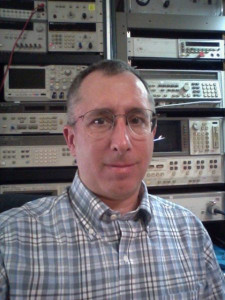
John E. Ross, III, Ph.D., P.E.
John is a licensed Professional Engineer in the State of Utah and has been consulting full time since 1997. His main areas of practice are applied electromagnetics, antennas, RF/microwave devices and radar. His clients have included small to medium sized businesses, Fortune 100 companies and government agencies. His consulting work has spanned the automotive, consumer electronics, medical, aerospace, defense, and energy sectors.
John received a B.S. in Electrical Engineering from West Virginia University in 1984. He was then employed as an engineer at the IITRI / DoD ECAC facility (now known as Joint Spectrum Command) in Annapolis, Maryland. He returned to WVU for graduate studies in the fall of 1985, and received an M.S.E.E. in 1987. He spent the next year doing graduate work in the area of microwave and millimeter wave remote sensing at the University of Michigan Radiation Laboratory.
He then transferred to Michigan State University where he was awarded a Department of Electrical Engineering Fellowship for the academic year 1988 to 1989. He received a Ph.D. in 1992 for his contributions to radar target discrimination using ultra wide band / short pulse radar. He continued working at MSU as a Post Doctoral Fellow until 1994.
He was then employed as a Staff Fellow at the General Motors R&D Center in Warren, Michigan where he developed software to simulate and design vehicular antennas. In 1996, he accepted a position as a Visiting Assistant Professor of Computational Electromagnetics at the University of Idaho where he taught courses in electromagnetics and microwave engineering. A state budget crisis the following year precluded a move to the tenure track and motivated him to start consulting. His first client was General Motors.
John has contributed to a dozen journal articles, two book chapters, 36 conference papers, and 47 US patents. He is a Senior Member of the Institute of Electrical and Electronics Engineers and a member of the National Society of Professional Engineers and the Applied Computational Electromagnetics Society.
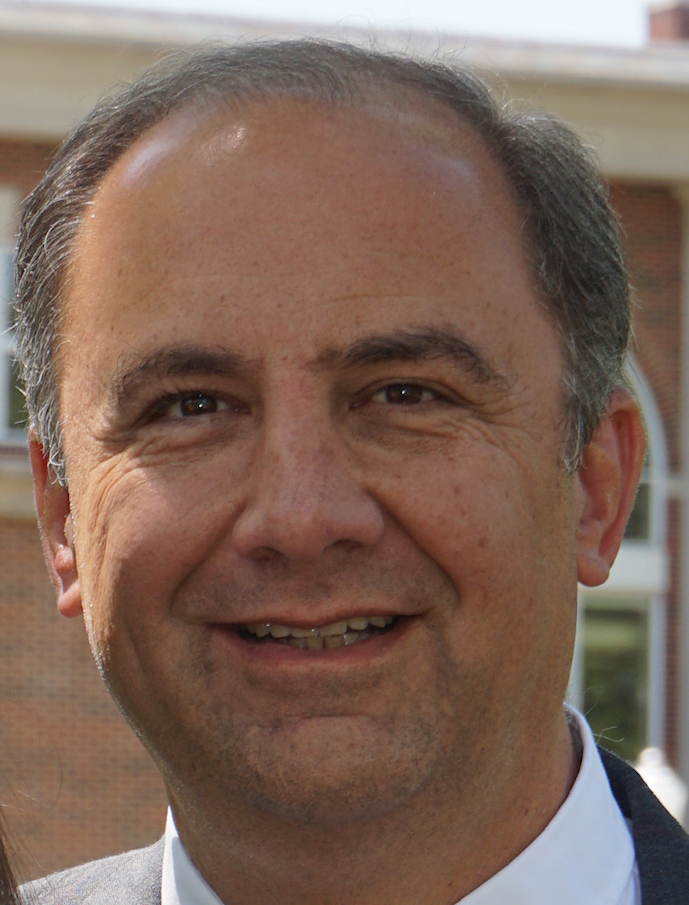
Jeffrey S. Sumey
Jeff is a retired associate professor from California University of Pennsylvania (now PennWest University) where he actively developed and taught various curricula for over 30 years.
Rooted in the Electrical and Computer Engineering Technology programs, he applied his specializations in digital and microprocessor systems, embedded systems, computer networking, and operating systems. He served as coordinator of those programs for some eight years. In that role, he led accreditation efforts to maintain ABET accreditation of both programs. He is experienced in digital control systems, signal processing, scientific and technical computing with OOD and conventional paradigms, computer virtualization technologies, and web-based and other multimedia delivery systems.
Jeff is an accomplished remote pilot of multiple forms of unmanned aerial systems including fixed wing, helicopters, and multirotors currently holding over 3,500 hours of flight operations. He developed and coordinated both A.S. and B.S. programs in UAS/Drone Technology while at CalU and also worked on grant projects with NASA, ONR, and the PA Space Grant Consortium.
Prior to and throughout his academic career, Jeff remained active as a consultant providing computer and networking services, custom software development, third-party software support, and just in time training. Some of his clients include county service agencies, area school districts, law firms, accounting firms, wealth management firms, chambers of commerce, YMCA, and numerous local and regional businesses.
He holds a B.S. in Mathematics and Computer Science from California University and a M.S. in Computer Information Science from West Virginia University.
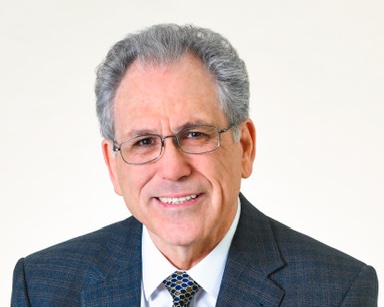
Gary W. Rich
Mr. Rich is an attorney with over 40 years of legal, corporate and government experience. He has demonstrated success in building and leading diverse teams in a national or international setting, managing, and completing projects, providing corporate security support, directing the finance and accounting function in a federal government agency, providing strategic immigration counseling, and bringing complex litigation to a successful conclusion.
While employed by Saudi Aramco in Dhahran, Saudi Arabia, Mr. Rich led teams in developing and negotiating contracts valued at more than $2 billion for engineering, oil and gas, and telecommunications projects. Most notable was his work on the Manifa Field, the fifth largest oil field in the world. The project included 27 man-made drilling islands in the Arabian Gulf. Manifa now produces 900,000 BPD of Arabian Heavy Crude. He was also a member of the team that provided oversight relative to execution of Saudi Aramco’s Capital Program.
As a US Diplomat, Mr. Rich was posted to the American Embassy in Germany, where his work took him throughout the former Soviet Union. Mr. Rich established banking relationships and implemented electronic funds transfer (EFT) systems for the Department of State in Russia and the former Soviet Republics. He directed the training of local personnel with respect to western business practices in Russia, Ukraine, Belarus, Kazakhstan, Uzbekistan, Turkmenistan, Kyrgyzstan and Azerbaijan.
He has interfaced with such key US government agencies as Citizenship and Immigration Services, Foreign Commercial Services, Treasury, Labor, USDA, and the FBI.
Mr. Rich earned both his BSBA (Accounting) and JD from West Virginia University.